
Google for restaurants: how to turn searches into bookings and new customers
Updated: Oct 13
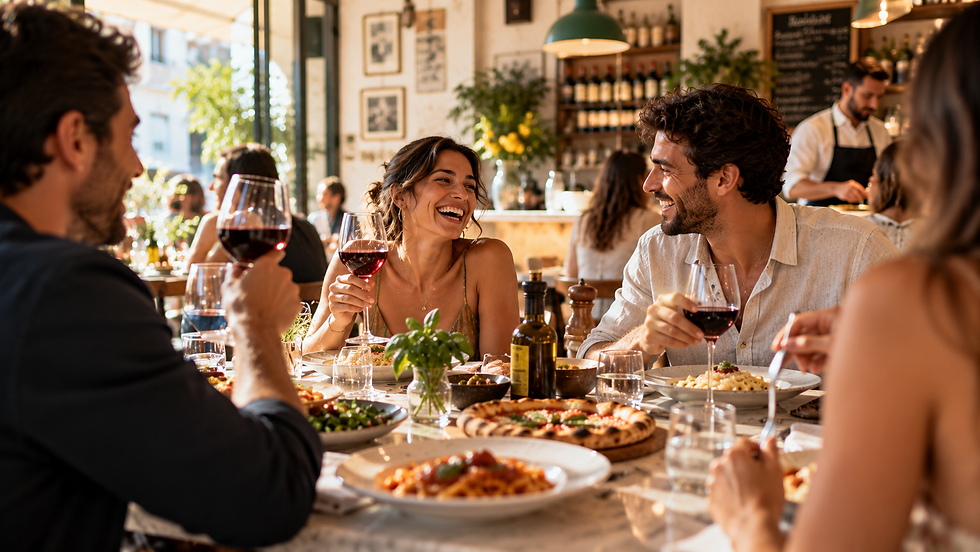
Someone in London searches for “Italian restaurant near me”. Another person looks up “where to eat in Soho” while making evening plans. A third already knows a restaurant’s name but wants to check the menu, prices and availability. In each case, Google can influence a decision that may be only minutes away.
For restaurants, this is a different opportunity from social media. Rather than competing for the attention of someone casually scrolling, the business can respond to demand that already exists. Yet appearing in search results is only the beginning: between the search and the occupied table are several moments when a potential guest might leave.
Search tells you about intent, not just keywords
Someone searching for “Japanese restaurant in London” may be comparing options for tonight, while someone searching for a particular restaurant by name may already be ready to book. Those intentions are different and require different responses.
A Google strategy for restaurants begins by understanding how people search, what questions they have and what information they need to make a decision. Popular keywords alone are not enough. Searches should reflect the restaurant’s concept, location, occasion and intended audience.
Google Maps is often the first shop window
A Google Business Profile acts as an extension of the restaurant’s front door. Opening hours, location, phone number, photos, menus, reviews and booking options all help guests decide whether to take the next step. When details are missing or outdated, uncertainty becomes part of the first impression.
Maintaining the profile is not a one-time task. Special hours, current photographs, appropriate categories, working links and a mobile-friendly booking journey all deserve regular attention.
Reviews are part of the decision
Before choosing, people often want to know what previous guests experienced. A thoughtful review can reinforce confidence, while repeated complaints about service, waiting times or inconsistency can create hesitation.
The goal should not be to chase stars at any cost, but to encourage genuine feedback and respond thoughtfully, particularly when something went wrong. A public reply also shows how the restaurant treats its guests.
Your website must finish the job search started
Imagine a guest finds the restaurant on Maps, likes the photographs and opens the website to see the menu. If the page loads slowly, the menu is difficult to read or booking requires too many steps, that initial interest may disappear.
A restaurant website should make the concept, menu, location, opening hours and booking options easy to understand. On mobile, especially, the journey should feel effortless. A visible booking link and a coherent experience can be more valuable than an elaborate but confusing design.
Local SEO helps you appear for relevant searches
Local SEO is the work of making a restaurant easier for search engines and people to understand in relation to its location and offering. It involves a technically sound website, useful pages, consistent information and a well-maintained Business Profile.
There are no shortcuts that guarantee first place. Visibility is influenced by relevance, distance and prominence, and the competitive landscape changes from search to search. The priority is useful, accurate information, not repeating “best restaurant” and a city name across every page.
When does Google Ads make sense?
Search advertising can reach people actively looking for a particular cuisine, occasion or neighbourhood. It may also support a restaurant opening or help promote an offering with identifiable demand.
But paid clicks cannot repair an outdated profile, an unclear proposition or a difficult booking process. Before increasing spend, check the destination of each ad and whether meaningful actions can be measured reliably. Google Ads should accelerate a journey that works rather than conceal its weaknesses.
Bookings matter more than click counts
Clicks, views and direction requests can signal interest, but they do not automatically mean guests sitting at tables. Useful measurement attempts to connect campaigns and channels with bookings, enquiries and other relevant actions, while recognising that not every visit can be attributed precisely.
Look at which searches bring qualified demand, which pages attract traffic, where people abandon the journey and how bookings change over time. Consistent information makes it easier to decide what to improve and where to invest.
From Google to the table, every step matters
A restaurant can serve excellent food and remain invisible to people deciding where to eat. It can also appear frequently on Google yet lose bookings because the next step is unnecessarily complicated.
At MYK, we see Google as part of a connected system of discovery, perceived value and conversion. Business Profiles, reviews, local SEO, websites and campaigns should play complementary roles aligned with the restaurant’s positioning.
The opportunity is not simply to generate more searches or clicks. It is to make it easier for interested people to find the restaurant, feel confident about choosing it and make a booking.


